

Rfx 2025: Reflections & Projections
Our first 'Request for x'

Listen to the AI Narrated commentary overview of the post:
As 2024 has shown, we’re not simply shifting but accelerating toward a future that demands deeper engagement from everyone. In the past year alone, we’ve seen record-breaking weather events, AI breakthroughs that showcase the potential to upend entire industries, supply-chain disruptions, and mounting socio-political pressures of dissatisfaction with the status quo — all underscoring how fragile and interconnected our systems truly are. Now, as we move into 2025, it’s clearer than ever that cosmetic fixes won’t suffice.
We stand at an inflection point calling for clarity, courage, and collective commitment. These crises aren’t theoretical; they’re shaping lives across every continent in real time. As the pressure builds, so does the urgency for solutions that move beyond incremental tweaks.
At Cool Climate Collective, we’ve always believed that meaningful progress arises from investing in & supporting the transformative, the practical, and the inevitable. But ideas alone aren’t enough. Real change comes from people who commit to bringing them to life.
Three years ago, we began with a simple yet bold vision: to forecast, address, adapt, mitigate, and explore the solutions necessary to meet the most pressing challenge of our time. That vision has evolved, shaped by the lessons we’ve learned and the partnerships we’ve built. Today, it’s clearer than ever that the solutions we seek must operate within systems—interconnected, dynamic, and built for resilience.
Building the future demands a coalition: entrepreneurs who create with foresight, operators who thrive in complexity, and co-investors who align capital with conviction.
The work ahead requires pushing boundaries and embracing uncertainty — not with reckless YOLO/FOMO, but with an intentional willingness to reimagine what’s possible.
Systems that once served us must be continuously tested against emerging realities. We’re not here to cling to fixed ideas; we’re here to cultivate practices that bend without breaking, that reorient as new truths emerge.
Introducing Rfx: Request for X
In this spirit of adaptability, we are launching our first Rfx: Request for X, a new tradition within Cool Climate Collective. Rfx serves as both a signal and an invitation, a way to share the new theories of change and insights uncovered through our Catalytic Circles, foresight practices, and trends we’ve been tracking.
Rfx is an open-ended request for startups, solutions, or concepts that demand deeper exploration.
Think of it like the Bat-Signal, illuminating the night sky to call in those who share our urgency and vision.
Whether these take the form of emerging technologies, novel business models, or fresh ways to reimagine old systems, Rfx is how we ask: What else is possible?
By sharing these explorations, we aim to create a ripple effect—connecting innovators, operators, and co-investors to opportunities that align with their strengths and aspirations.
Rfx isn’t a simple “predictions for the year” list; instead, it represents long-term possibilities that may unfold over years. Their realization depends entirely on identifying the right solutions and executing them effectively.
Our goal is for it to evolve as we uncover new insights and refine our understanding of where we can have the greatest impact. It’s a dynamic bridge between foresight and action, a means of shaping a future that demands imagination and resolve.
Seven Themes to Shape the Future
Our initial Rfx introduces seven interconnected themes that guide our general interest areas we’d like to explore deeper in 2025. Each of these themes sits at the intersection of foresight and innovation, representing living ideas that adapt as the world around us shifts. They point to where the improbable becomes inevitable, and where big questions invite bold answers.
1. xT: The Dissemination of the Essential
The last century was shaped by the boom of Information Technology (IT). We witnessed bits and bandwidth tear down barriers, democratizing access to knowledge, commerce, and community. Entire industries were upended by the global shockwave of “information for all.” But the future calls for more than just better data. It demands a new wave—xT—focused on life’s core foundations: air, water, energy, and waste systems.
Just as IT turned once-scarce information into a global resource, xT aims to do the same for life’s essentials.
Think of “neo-utilities”—distributed, adaptive, and regenerative infrastructures that don’t merely supply resources but enhance them. Like veins branching through a leaf, xT systems ensure that the basics of life stay abundant, accessible, and resilient for all.
Why does this matter? Because clinging to older, centralized models only leads to patchwork solutions and perpetual scarcity. xT breaks from that mindset, creating an environment where people don’t have to compete for air, water, or clean power. Instead, it redefines these fundamentals as shared pillars of a thriving society.
The result? A world where essentials stop being luxuries and start becoming baseline guarantees. This shift is transformative rather than incremental, setting the stage for widespread wellbeing that enriches both people and the planet. Simply put, xT invites us to build a future where life’s essentials aren’t just improved—they’re reimagined as the backbone of global prosperity.
What are the foundational infrastructure requirements needed to unlock each new “x” in xT?
2. Localization: Scaling What Matters
Globalization fueled scale and efficiency, connecting markets and minds worldwide. Yet it often traded away resilience and equity in favor of uniformity. The path forward lies in the localization of global systems—crafting solutions that are right-sized for the communities they serve while leveraging the best globalization has to offer. This doesn’t mean turning inward; it means weaving shared knowledge, digital tools, and international collaboration into local realities so that innovations meet genuine human and environmental needs.
Resilience grows from the ground up—and flows back to the global stage.
Think of modular food systems tailored to local conditions, community-based energy grids designed for sustainability, or decentralized manufacturing hubs sparking regional self-reliance. By adapting global insights to local contexts, we boost adaptability, inclusivity, and long-term strength.
Meanwhile, the lessons learned in each locality loop back into global networks, fueling parallel innovations and enhancing collective resilience.
Localization isn’t a step backward; it’s a nuanced leap forward, tapping into worldwide synergies while honoring the distinct needs of each region. By building systems with communities, not just for them, we unlock shared prosperity that strengthens both local and global well-being.
How can we weave global collaboration into locally driven solutions, ensuring each community not only gains self-reliance but also enriches a more resilient world?
3. Opportunities in the Extremes: Nature’s Stress Test
Extreme environments—whether defined by climate, geography, politics, or economics—are where solutions are forged under the highest pressure. In these conditions, weak ideas fail fast, and strong ideas emerge stronger. What survives in the extremes can transform the mainstream.
Communities living in challenging conditions aren’t early adopters by choice—they are out of necessity.
Once a solution is proven in the harshest conditions, it’s stress-tested and ready to scale out to contextually-similar markets & more stable markets. These frontier learnings loop back into global networks, accelerating parallel breakthroughs and enhancing collective adaptability. In short, the edge isn’t a dead end—it’s a launchpad.
By thriving where the stakes are highest, we create robust solutions that strengthen entire systems.
How do we harness these extreme frontiers not just as testing grounds for survival, but as launchpads for solutions that can reshape entire systems worldwide?
4. Resilience for Renewables: Adapting the Adaptations
Renewables have shifted from a hopeful future to the foundation of our emerging energy landscape. Yet as solar farms and wind turbines scale, new vulnerabilities come into sharper focus. It’s not enough to deploy them in controlled conditions; they must weather hailstorms, volatile gusts, cybersecurity threats and unpredictable demand without failing under pressure.
Adaptation is a cycle, not a one-time fix.
Building resilience into renewables means using self-healing materials, modular grid configurations, weatherization of sites, and predictive analytics to ensure these systems evolve along with the climate. When nature throws a curveball, a truly robust setup doesn’t just endure—it thrives.
Far from being the end of the journey, installing renewable infrastructure is just the starting line. Constant monitoring and iterative improvements—at the intersection of technology, data, and real-world stressors—are key. That’s how renewables stay strong, flexible, and future-proof, providing clean energy under even the toughest conditions.
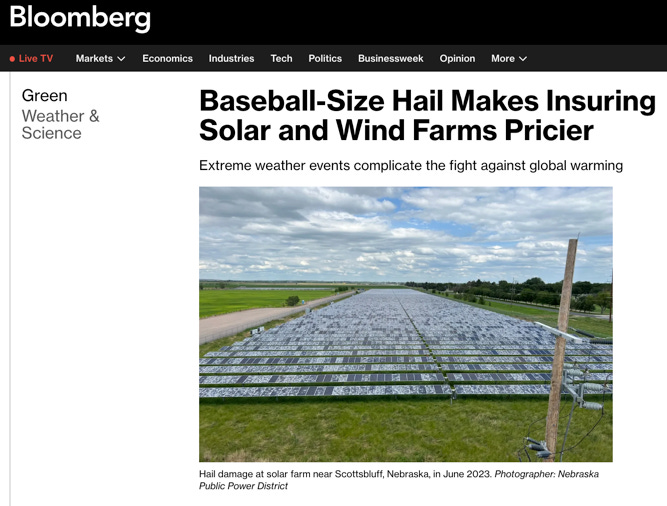
Building resilience into renewables means designing systems that not only function but also endure. It means integrating self-healing or hardened materials, modular grid configurations, and predictive analytics. Adaptation doesn’t end once renewable infrastructure is in place—it’s just the beginning of ongoing optimization.
How do we design and scale renewables that don’t just withstand the hardest hits, but come out stronger—evolving with every challenge to remain our most reliable energy foundation?
5. Simplicity Over Synthetic: The Pushback for Authenticity
As synthetic and heavily processed inputs permeate not only our food chain but our built environments, a countercurrent emerges—one that seeks to restore simplicity, authenticity, and genuine human connection to the natural world. This shift isn’t a rejection of progress; it’s a collective desire for balance.
From the supermarket to the factory floor, there’s growing concern about the toll exacted by artificially ‘forever’ shelf-stable products.
In a world of complexity and noise, we crave grounding in the real and the tangible. This is why consumers are rediscovering the value of whole foods in the face of ultra-processed diets and looking for transparent sourcing in products that once felt remote and impersonal.

Championing Authentic Ingredients is about harnessing human ingenuity in harmony with nature’s inherent wisdom. It’s not about halting innovation; rather, it’s ensuring that our advances augment, rather than overwhelm, the natural order.
What breakthroughs are enabling us to enhance natural ingredients, expanding how we consume them?
6. Electrons-to-X: Enabled by Abundant Energy
Petrochemicals have long functioned as both fuel and feedstock, spawning countless by-products fundamental to modern life. Until now, fossil fuels provided not just energy, but base chemicals for plastics, fertilizers, and more.
Electrons-to-X represents the next chapter in that evolution. As renewables become cheaper and more abundant, their electrons can drive chemical reactions to yield new forms of hydrogen, ammonia, and other critical feedstocks—areas once dominated by petrochemicals.
Abundant electrons won’t just light our world; they’ll reshape our entire material economy.
With the right catalysts, electrons can power the conversion of CO₂ into complex organic molecules. The result? Low- or zero-carbon polymers and plastics, moving petro-based manufacturing toward a circular, climate-aligned model.
In essence, Electrons-to-X reframes renewables as not just a source of clean electricity, but a universal factory for feedstocks, reshaping entire industries once dependent on fossil fuels. It’s a gateway to rewriting our material world with less pollution and more resilience, harnessing abundant, cheap electrons to create the building blocks of tomorrow’s infrastructure, products, and economy.
What are first principles approaches to enabling Electrons-to-X?
7. Large Action Models: The Next Frontier of Agentic AI
We may be the last generation to live without ever-present robotic assistants. Our children will grow up in a world where robots aren’t curiosities; they’re cohabitants. Just as AI has transformed how we think and create, Large Action Models (LAMs) will forever change how we act and execute. If Large Language Models predict what to say next, LAMs predict what should be done next—automating complex tasks by breaking them into smaller, trackable actions.
LAMs aren’t built on text alone. They thrive on multi-sensory data—video, motion capture, operational logs, sensor feedback, and more.
Every time we use our phones, drive a vehicle, or work with a physical assistant, we’re generating behavioral data that trains these models. Social media and user-generated content helped LLMs learn language; real-world operational data will help LAMs learn action. And as robotics becomes ubiquitous, LAMs will power everything from factory-floor automation to your personal day-to-day errands.
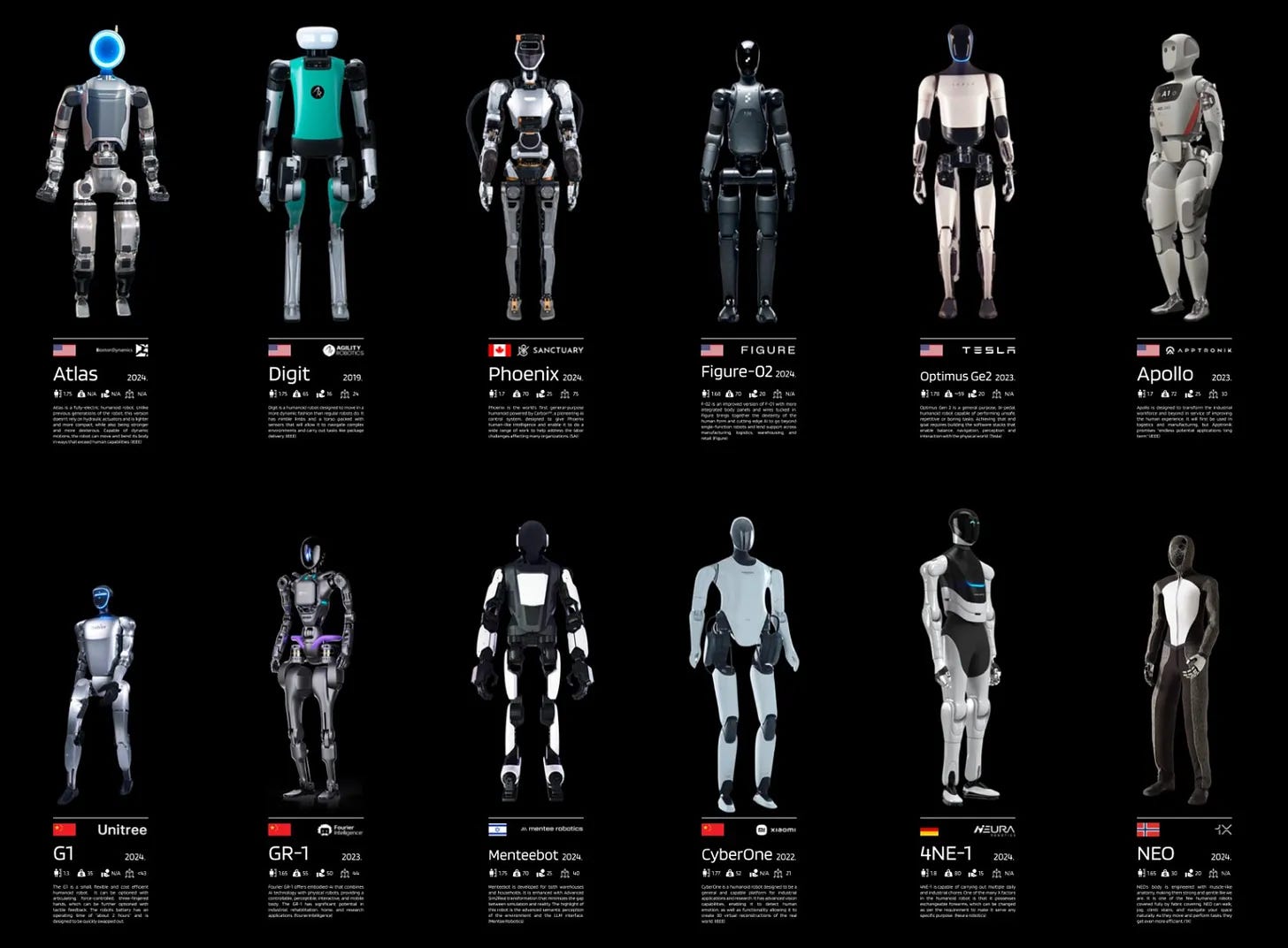
That’s why companies, communities, and even governments will soon invest in Personal Large Action Models (PLAMs), Corporate LAMs (CLAMs), and Government LAMs (GLAMs)—each trained on distinct data sets for distinct purposes.
PLAMs will handle individuals’ tasks, preferences, and daily routines, negotiating with other agents and making low-level decisions seamlessly.
CLAMs will orchestrate entire organizational workflows, reacting in real time to internal metrics and market conditions.
GLAMs will manage public services, optimizing societal-scale functions like transportation or utilities.
But with this shift comes a fundamental question: How do we design and govern the platforms, sensors, and data flows so that LAMs can securely learn from our behaviors and interactions—without compromising our autonomy, privacy, or trust?
By answering this question, we’ll lay the foundation for a future where robots and AI don’t just talk or show us information—they will act on our behalf, in ways that feel as natural and essential as the air we breathe.
A final point to consider: as we extrapolate from this realization, the inevitability of humanoid robots mastering even a singular task with unparalleled precision becomes clear. This raises a profound question: how do we value time and effort when the pinnacle of craftsmanship is achieved by machines? (Read more: Rise of Robot Savants)
How these robots learn, train and execute physical world tasks will have profound consequences that extend into various aspects of society, environment and governance.
A Call to Action: Join Us in Shaping What’s Next
This is an open invitation. If you are:
an entrepreneur looking to build,
an operator with the skills to scale solutions, or
an investor aligning capital with conviction…
and most of all, you have alignment with any of our Rfx — get in touch.
As we launch new initiatives and expand our multi-asset strategy in 2025, Rfx becomes our vehicle for turning insights into action. By blending diverse forms of capital, expertise, and collaboration, we aim to catalyze progress where it’s needed most, and we invite you to co-create in this journey with us.
Collectively, we can move beyond incremental change to architect systems that are resilient, dynamic, and built for the future. There’s meaningful work to be done, and the best way to begin is together.
Let’s get started.